They sit side by side in every search result, and they work in opposite ways. One holds you in position; the other teaches you to hold yourself. Which you should buy depends on which of those you actually need.
A posture brace (also sold as a posture corrector) is a strap harness that physically pulls your shoulders back. It does the work for you — while you wear it. A posture shirt is a fitted top with tension panels that add gentle resistance when you slouch, cueing your own muscles to correct you. It does no holding at all; it's a reminder with a hundred small nudges a day. That single difference drives everything in the table below.
| Posture shirt | Posture brace / corrector | |
|---|---|---|
| How it works | Tension panels cue your muscles (proprioceptive feedback) | Straps physically pull shoulders back |
| Typical wear time | All day, like a normal top | Short bouts — usually 15 min to 2 hours |
| Under clothes | Looks like an undershirt or tee | Bulky straps; often visible at the neck and shoulders |
| Comfort | Snug compression fit; breathable options exist | Can dig in at the armpits; easy to overtighten |
| Training effect | Builds the habit — your muscles do the correcting | Little carry-over once removed; overuse can let postural muscles idle |
| Price range | ~$35–150 | ~$15–40 |
| Best for | Desk workers building a lasting posture habit | A cheap first experiment, or short, deliberate posture sessions |
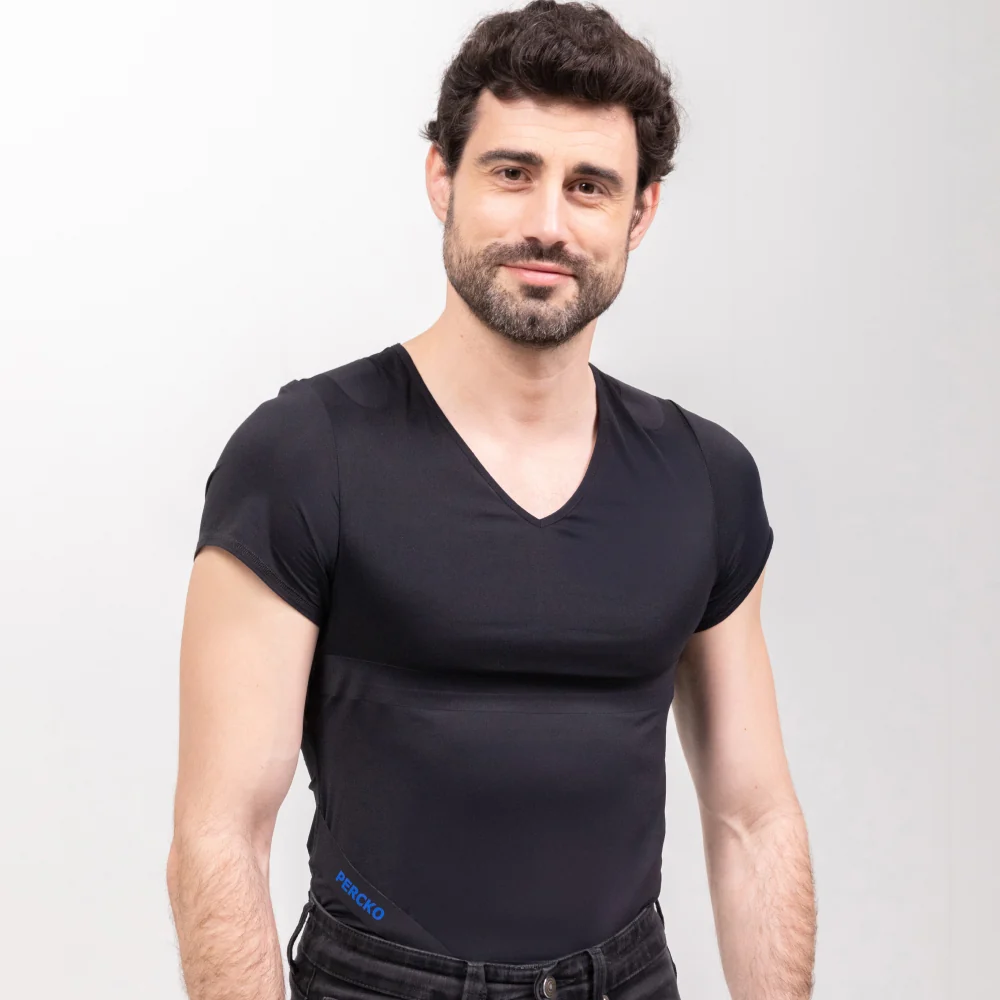
The most posture-specific shirt tech: patented tensor system from the French company that has sold posture shirts since 2015. The cueing benchmark.
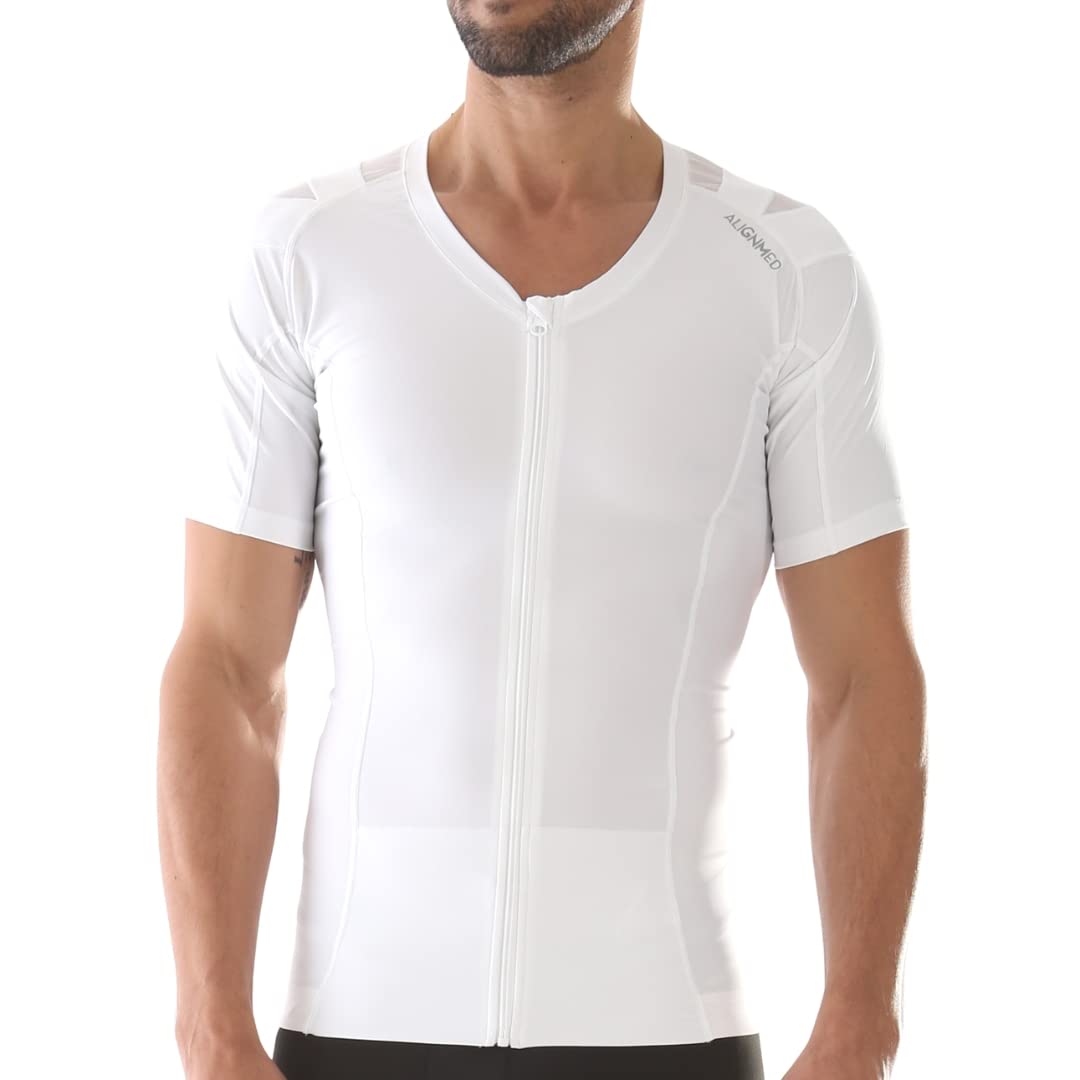
NeuroBand tension panels, men's and women's, pullover and zipper versions. The long-track-record shirt pick.
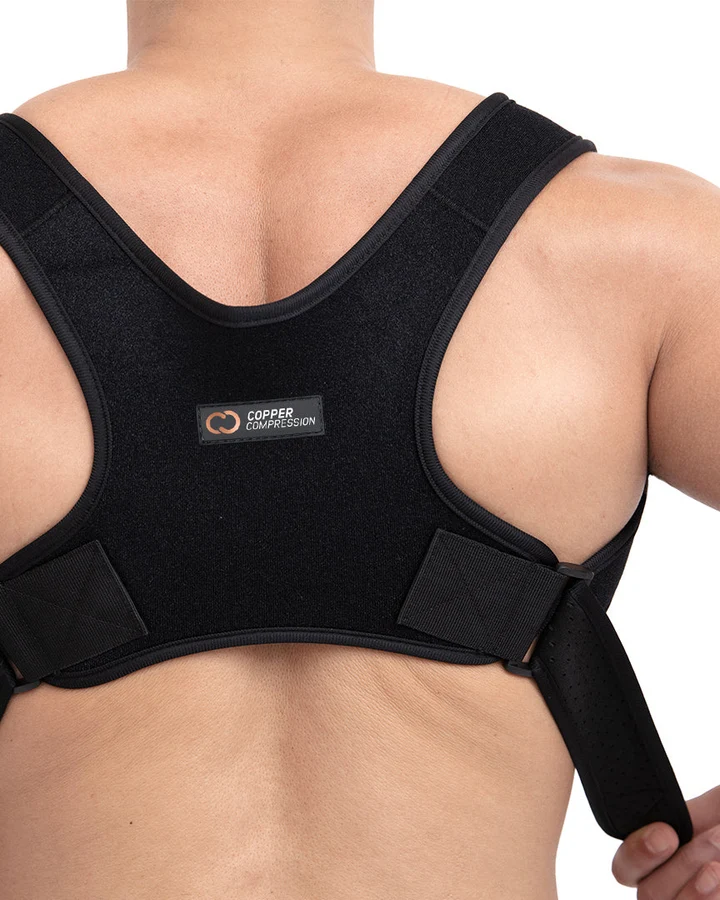
The classic adjustable strap brace at a fraction of a shirt's price. The sensible way to test whether external cueing helps you at all before spending more.
Choose the brace if your budget is small, you want to experiment before committing, or you plan short, deliberate sessions — wearing it for an hour at your desk as a posture drill, then taking it off. Used that way, it's a legitimate tool. Just don't wear it all day: a brace that holds you for eight hours is doing the work your muscles need to learn, and overtightening it trades a slouch for sore armpits.
Choose the shirt if your goal is a habit that survives without the garment. It costs more because it's real clothing with engineered panels, it disappears under a work shirt, and its whole design is aimed at the training effect — your muscles correcting you, hundreds of times a day, until they start doing it unprompted.
And the honest footnote for both: neither a shirt nor a brace fixes posture on its own. They cue; exercise is what strengthens the weak muscles and lengthens the tight ones, and your desk setup is what stops re-teaching the slouch every day. The buyers who get results treat the garment as one leg of a three-legged stool. Our Back Health section covers the other two legs — free.
